show 1 to 12 (of 12 software programs)
caLa vCE
Administration software for school networks
With caLa vCE you can manage different operating systems on a variety of different end devices in your network. Various services such as printing, Internet, CD/DVD drives and USB ports can be blocked or released for the school network. Applications or file packages can also be made available or removed for individual users or an entire class. The software is scalable and includes mobile device management. With the help of identity management, each user always has their individual rights and direct access to their files (e.g. home directories) on each device.
AT+C VM.7 - DCIM
 The AT+C Connection Manager VM.7 software is a comprehensive information and planning solution for networks, building cabling, cable management and the associated network documentation of all IT components (active/passive) and circuits.
Software for cable management and network documentation
The AT+C Connection Manager VM.7 software is a comprehensive information and planning solution for networks, building cabling, cable management and the associated network documentation of all IT components (active/passive) and circuits.
ICTestAutomation - Functional tests
Software solution for the convenient automation of functional tests of applications
Test automation made easy - With ICTestAutomation! The solution offers test and service managers many advantages, especially in environments with heterogeneous IT and application platforms. ICTestAutomation uses OCR and image recognition techniques. This makes it possible to test all application technologies, browsers and hardware platforms. Your solution for: Test definition, test execution, test reporting and analysis as well as integration.
cableScout software for the management of optical fiber networks
 cableScout is a documentation and information platform that has been developed specifically for the management of telecommunications networks. It enables all types of fibre optic and copper networks to be documented and efficiently
managed both on a physical, logical and virtual level, in other words, from the georeferenced position to the signal layer. cableScout® supports all relevant technologies in the transmission and access sectors including SDH, PDH, xWDM, xPON, Ethernet/IP, xDSL and FTTx.
cableScout is a documentation and information platform that has been developed specifically for the management of telecommunications networks. It enables all types of fibre optic and copper networks to be documented and efficiently
managed both on a physical, logical and virtual level, in other words, from the georeferenced position to the signal layer. cableScout® supports all relevant technologies in the transmission and access sectors including SDH, PDH, xWDM, xPON, Ethernet/IP, xDSL and FTTx.
Software for the documentation, design, and administration of optical fiber networks
cableScout is a documentation and information platform that has been developed specifically for the management of telecommunications networks. It enables all types of fibre optic and copper networks to be documented and efficiently
managed both on a physical, logical and virtual level, in other words, from the georeferenced position to the signal layer. cableScout® supports all relevant technologies in the transmission and access sectors including SDH, PDH, xWDM, xPON, Ethernet/IP, xDSL and FTTx.
CitraTest VU® - Load tests
Software solution for valid load tests without programming effort
CitraTest VU® allows you to perform load tests on your servers without a great deal of programming effort. The program works with a dynamic image recognition system and is extremely stable thanks to consistent script execution and intelligent synchronization. CitraTest VU® reliably delivers valid measurement results at all times. CitraTest VU® enables you to carry out meaningful load tests on your systems.
Asset.Desk
 Management and documentation of all hardware and software assets over their entire life cycle. Linked to contracts, costs, allocation to locations, departments and cost centres, it is the basis for IT operations, planning, controlling and purchasing.
Enables the inventory of virtual environments such as vCenter and Hyper-V and allows the hardware and software of the data centre to be managed. Since 2019, Asset.Desk also provides an overview of cloud usage and costs. One of the few SAM tools certified by KPMG since 2015.
Allows mobile support of the processes of acquisition, goods receipt, inventory, IT operations and disposal.
Interfaces based on REST services allow integration into any corporate environment, e.g. with ERP and helpdesk or similar systems.
Asset.Desk makes inventory possible with barcode or RFID.
Management and documentation of all hardware and software assets over their entire life cycle. Linked to contracts, costs, allocation to locations, departments and cost centres, it is the basis for IT operations, planning, controlling and purchasing.
Enables the inventory of virtual environments such as vCenter and Hyper-V and allows the hardware and software of the data centre to be managed. Since 2019, Asset.Desk also provides an overview of cloud usage and costs. One of the few SAM tools certified by KPMG since 2015.
Allows mobile support of the processes of acquisition, goods receipt, inventory, IT operations and disposal.
Interfaces based on REST services allow integration into any corporate environment, e.g. with ERP and helpdesk or similar systems.
Asset.Desk makes inventory possible with barcode or RFID.
Inventory, asset and lifecycle management, licence and contract management and much more.
Management and documentation of all hardware and software assets over their entire life cycle. Linked to contracts, costs, allocation to locations, departments and cost centres, it is the basis for IT operations, planning, controlling and purchasing.
Enables the inventory of virtual environments such as vCenter and Hyper-V and allows the hardware and software of the data centre to be managed. Since 2019, Asset.Desk also provides an overview of cloud usage and costs. One of the few SAM tools certified by KPMG since 2015.
Allows mobile support of the processes of acquisition, goods receipt, inventory, IT operations and disposal.
Interfaces based on REST services allow integration into any corporate environment, e.g. with ERP and helpdesk or similar systems.
Asset.Desk makes inventory possible with barcode or RFID.
CRYPTO-BOX SERIAL
 The CRYPTO-BOX SERIAL software protection dongle for the RS-232 serial port supports a subset of the Smarx OS (CBIOS) API and can be used for any platform with a serial interface. The implemented AES/Rijndael algorithm always remains on the hardware. Each CRYPTO-BOX has an individual serial number.
Software and data protection for the serial interface
The CRYPTO-BOX SERIAL software protection dongle for the RS-232 serial port supports a subset of the Smarx OS (CBIOS) API and can be used for any platform with a serial interface. The implemented AES/Rijndael algorithm always remains on the hardware. Each CRYPTO-BOX has an individual serial number.
SENTINEL
 SENTINEL is the perfect label printing automation software. When you click "Print" in your ERP or other third-party system, a file is placed in a SENTINEL watch folder. SENTINEL reads the file and automatically performs accurate label printing! SENTINEL's unique "Mapper Tool" decodes the data and automatically converts it to text, barcodes or images on your labels.
The central print management software for label printing
SENTINEL is the perfect label printing automation software. When you click "Print" in your ERP or other third-party system, a file is placed in a SENTINEL watch folder. SENTINEL reads the file and automatically performs accurate label printing! SENTINEL's unique "Mapper Tool" decodes the data and automatically converts it to text, barcodes or images on your labels.
ROBERT KNOWS
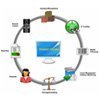 ROBERT KNOWS supports you in network management by reading hardware and software information from your PCs. It monitors and reports the toner and page consumption of your network printers. Our software enables you to document your network connections and provides a clear overview of patch connections. The combination of network management with license management also compares the installed software with the managed licenses.
Inventory management / Contracts / Licenses / Helpdesk
ROBERT KNOWS supports you in network management by reading hardware and software information from your PCs. It monitors and reports the toner and page consumption of your network printers. Our software enables you to document your network connections and provides a clear overview of patch connections. The combination of network management with license management also compares the installed software with the managed licenses.
CitraTest APM® - End-to-end monitoring
 CitraTest APM® is an end-to-end monitoring software with which you can monitor the availability and response times of applications during operation from the end user's perspective. With the solution for active end-to-end monitoring, you can monitor all application types and versions. The software works with all operating systems and in all development environments and runtime environments.
Software solution for monitoring the availability and response times of applications
CitraTest APM® is an end-to-end monitoring software with which you can monitor the availability and response times of applications during operation from the end user's perspective. With the solution for active end-to-end monitoring, you can monitor all application types and versions. The software works with all operating systems and in all development environments and runtime environments.
SightLine® - Performance analysis and capacity management
Software solution for designing and optimizing IT landscapes
SightLine® helps you to optimize your entire IT structures and improve performance. The software solution monitors the load and performance of IT services and components. Planned changes can be simulated and thus optimized in advance. With SightLine® you can record and evaluate data centers and networks (front and back-end systems) as well as end-user devices.
CrypToken
 CrypToken® offers all the important features as a storage medium. For example, keys and digital certificates for authentication, e.g. for PKI-based systems, e-mail encryption, VPN and much more, can be stored on the CrypToken.
USB token for security solution providers
CrypToken® offers all the important features as a storage medium. For example, keys and digital certificates for authentication, e.g. for PKI-based systems, e-mail encryption, VPN and much more, can be stored on the CrypToken.show 1 to 12 (of 12 software programs)
1